a person touching a plant

Certified, Sustainable Agriculture

For the last three decades, we've been working to critically assess and ensure the sustainability of our feedstocks through accountability, continual learning, innovation, and leadership. We remain committed to feedstock diversification and to listening to the concerns of our agricultural communities and our partners in the supply chain.
a logo for a company
ISCC PLUS, our 3rd party certification for sustainable feedstocks
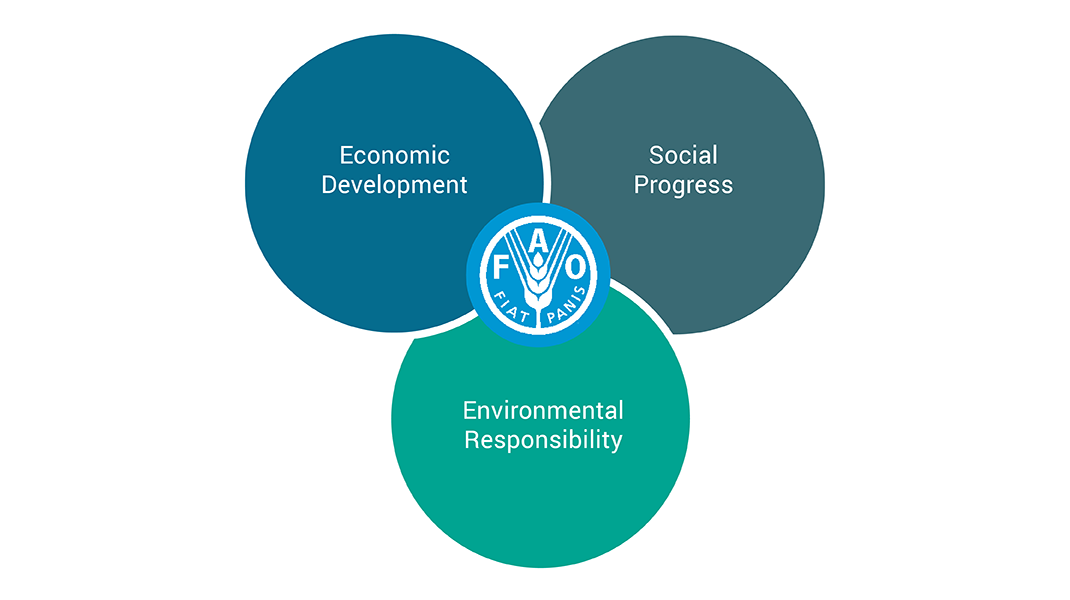
At our first Ingeo manufacturing plant, located in Blair, NE, USA, we transform atmospheric carbon into Ingeo by utilizing the starch by-product of purpose grown industrial field corn called yellow dent #2. To ensure that the field corn we purchase adheres to our principles for sustainable feedstocks, these crops are certified by the International Sustainability & Carbon Certification System (ISCC) to the ISCC PLUS standard of best practices in agricultural production. ISCC’s requirements fulfill the guidance set by the OECD and FAO in their publication "Guidance for Responsible Agricultural Supply Chains" (2016).
a diagram of a diagram
Sustainable agriculture is a broad term that has come to represent more than any one crop or growing practice. The Food and Agriculture Organization of the United Nations (FAO) has said, ”Sustainable agriculture conserves land, water, and plant and animal genetic resources, and is environmentally non-degrading, technically appropriate, economically viable, and socially acceptable” (FAO, 1988). 

We are committed to these same tenants for the agriculture that is the foundation of our materials portfolio.

ISCC PLUS includes 86+ ‘sustainability requirements’ based on 6 principles


The ISCC PLUS certified crops are grown within 50 miles of the NatureWorks’ Blair, Nebraska, production facility, and involve more than 110 local farms. Every farm entering the ISCC program receives training in adhering to the ISCC PLUS certification’s sustainability requirements according to six principles:
a blue circle with a path and a butterfly

Biodiversity Protection

Sourcing from land with high biodiversity (forest & grass land or land with endangered species or ecosystems), high carbon stock (wetlands); or peatland is prohibited.
a blue and white logo

Farming Best Practices

This includes protection of soil, air and water quality; best tillage practices; fertilizer application practices; irrigation practices; reducing soil erosion and maintaining soil organic carbon; proper pesticide handling; and protecting vegetation and watercourses surrounding the acres.
a logo of a shield with a globe and leaves

Safe Working Conditions

Safe working conditions include health, safety and hygiene policies, training, as well as the use of protective clothing and procedures in case of accidents.
a blue and white circle with hands shaking

Compliance with Human Labor & Land Rights
Human labor rights ensure the rights of workers and local communities are protected. Land rights stipulate biomass production does not impair food security. Furthermore this principle requires any children living on ISCC farms have access to education and no forced labor or discrimination occurs.
a blue and white logo

Compliance with Laws & International Treaties

This requires that all biomass production takes place in compliance with applicable regional and national laws and follows international treaties.
a blue line drawing of a checklist

Good Management Practices

This certifies minimum requirements of good management practices are followed, including basic economic and proper management documentation is kept.
blue icons of a factory
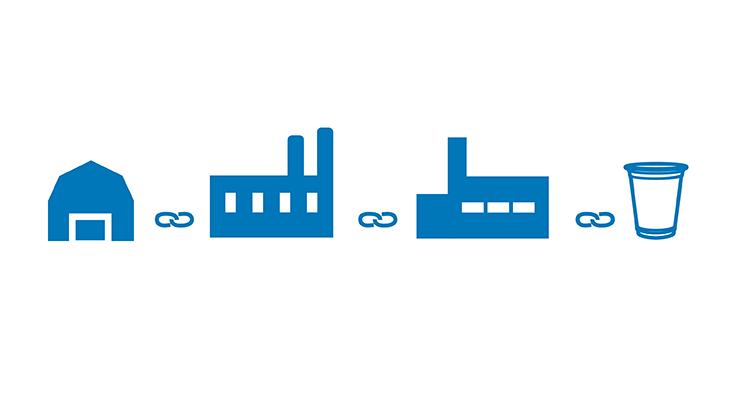
Chain of custody ensures traceability

Chain of custody means that the total volume of Ingeo received by the “final user of the product” is traced back (and documented through a mass balance system) to the equivalent amount of certified, sustainable corn produced. Site specific audits and certificates ensure full traceability along the supply chain.

Manufacturing Ingeo does not require a GM feedstock


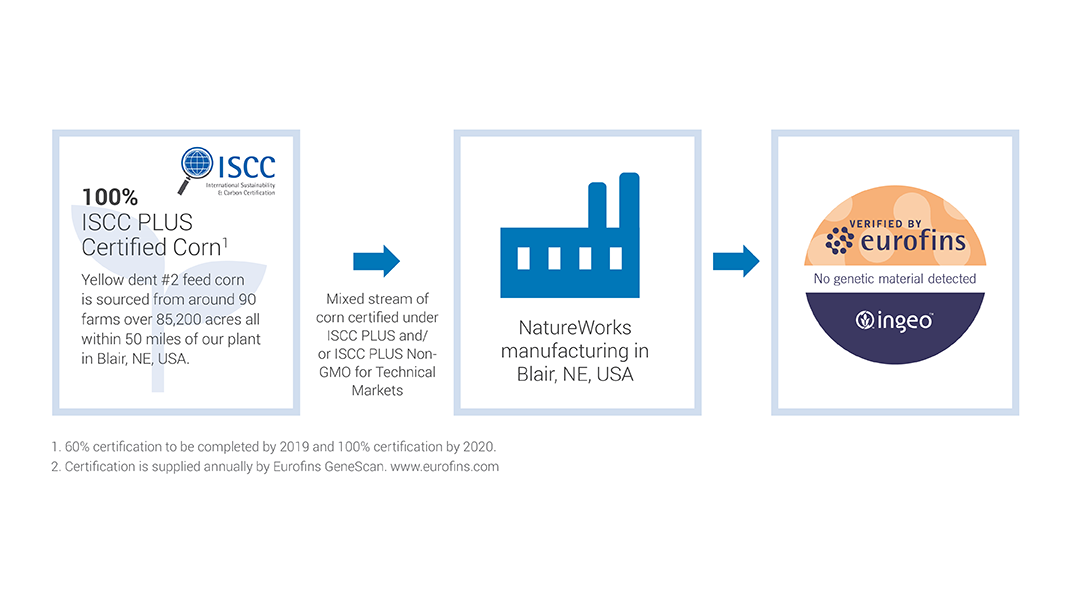
From our first kilograms of Ingeo produced and still today, all Ingeo biopolymer manufactured by NatureWorks is free of genetically modified (GM) materials as certified by the 3rd party, Eurofins Genescan, an industry leader in testing for GM material in products. While Ingeo does not contain any genetic material, and does not require genetically engineered feedstocks, NatureWorks is sensitive to market concerns around GM feedstocks. That is why we chose to work with ISCC and have them certify that all aspects of sustainable agriculture are met for the field corn that we use to supply our manufacturing facility in Blair, Nebraska and provide an option for 3rd party certified non-GM feedstocks.


Our manufacturing facility in Thailand will use locally grown sugarcane, which is a non-genetically modified crop, as a feedstock. Because we do not need a specific agricultural source of sugar to manufacture Ingeo, both of our manufacturing sites will produce the same portfolio of Ingeo PLA resin grades.
ISCC-Eurofins

NatureWorks also provides an optional 3rd party audited and certified program with ISCC called ISCC PLUS Non-GMO for Technical Markets for partners looking to support non-GM feedstock utilizing a mass balance system.
Certification Documents & Brochures


a person touching a plant

Certified, sustainable agriculture programs at NatureWorks
a large green field with trees and a road

Questions on food competition and agricultural land use
a close up of a machine

Future technology for direct greenhouse gas conversion to biopolymers