
Phoam Labs uses NatureWorks monomers to create a greener floral industry
At this Minnesota-based startup, compostable floral foam eliminates wasteful, single-use plastics
Underneath some gorgeous floral displays, there can be a not-so-pretty truth: toxic floral foam.
One research project sought to break this pattern of enormous, needless waste. Born at the Center for Sustainable Polymers, a National Science Foundation Center for Chemical Innovation at the University of Minnesota, that project has since blossomed into Eden Prairie-based startup Phoam Labs.
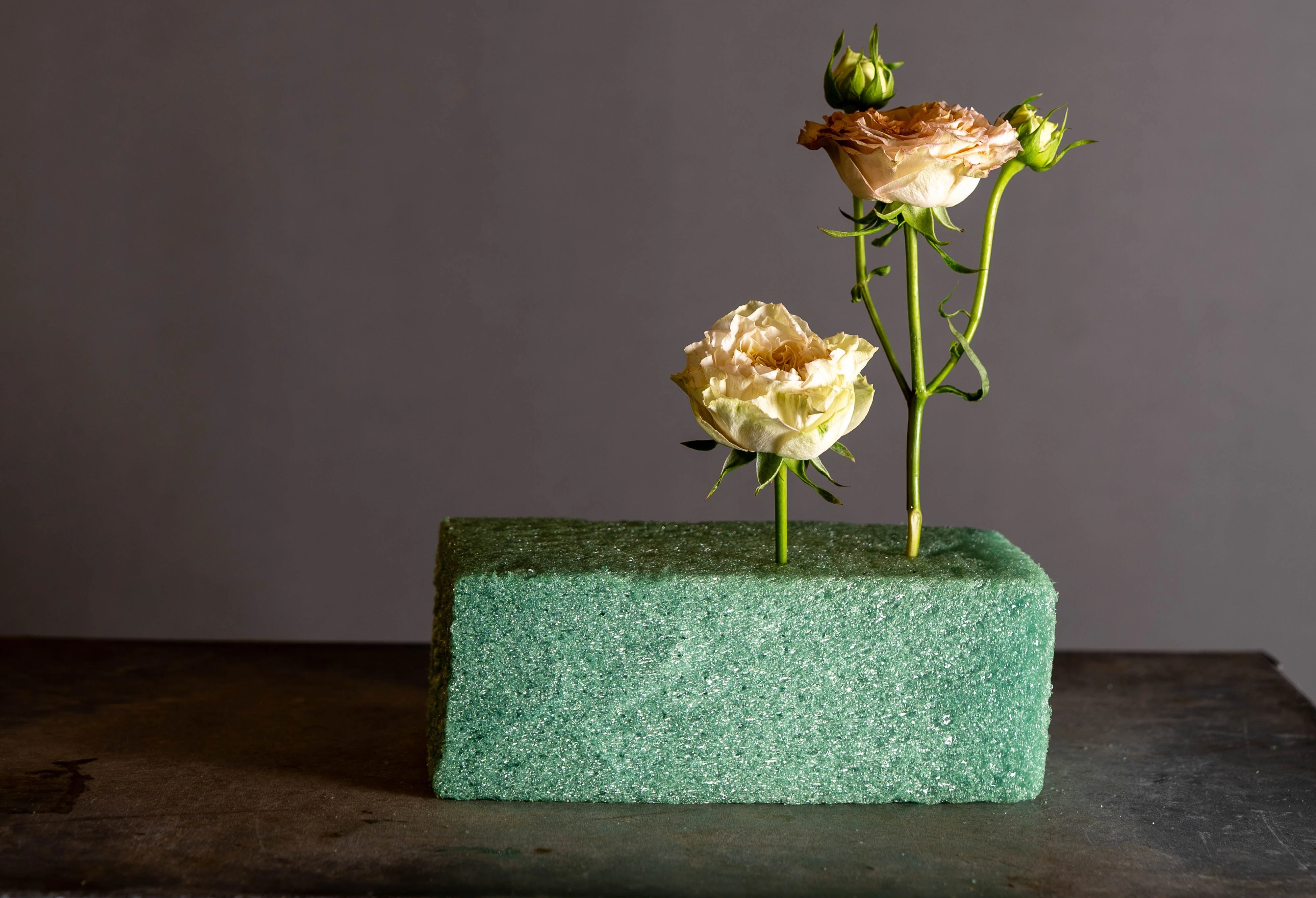
Phoam Labs creates a custom, innovative resin using NatureWorks monomers, the 100% plant-based substance that forms the basis of Ingeo. This resin then undergoes a foaming process to create bricks that perform just as well as their petroleum-based counterparts. The manufacturing process is more sustainable than that of traditional floral foam and creates less waste. At end-of-life, the foam is certified compostable in an industrial setting, and Phoam Labs plans to pursue certification for home composting—features only made possible with the use of NatureWorks’ biobased materials.
Breaking wasteful patterns in the floral industry
Florists often already compost their leftover leaves, stems, and damaged blooms, either at home or through yard waste collection. But despite a longstanding trend toward sustainable practices in the industry, any petroleum-based floral foam is destined for the landfill or our waterways. After an event, florists must either pick flowers out of the foam and dispose of each separately, or throw the entire arrangement in the trash. And because floral foam crumbles easily, there’s no surefire way to keep small pieces out of the compost pile.
While some floral foam options on the market are advertised as biodegradable, these foams are still petroleum-based and the only safe destination for disposal is in a landfill. In fact, researchers have found that these foams are very similar in chemical composition to traditional floral foams and perhaps even more prone to creating microplastics. These “biodegradable” foams might break down faster, but they’re still putting virgin, petroleum-based plastics into the environment.
In 2016, Goldfeld was a PhD student researching advanced macromolecular materials under the supervision of Professor Marc Hillmyer, Director of the Center for Sustainable Polymers. Together with Dundee Butcher, a former florist, they formed a business that partnered with the CSP to create a sustainable alternative to floral foam. After a few years of experimentation with plant-based NatureWorks monomers, they created a compostable foam that performs as well as petroleum-based options: it can provide water to keep blooms fresh and has the rigidity needed to hold all kinds of stems. Their pioneering prototype received a patent in 2022.
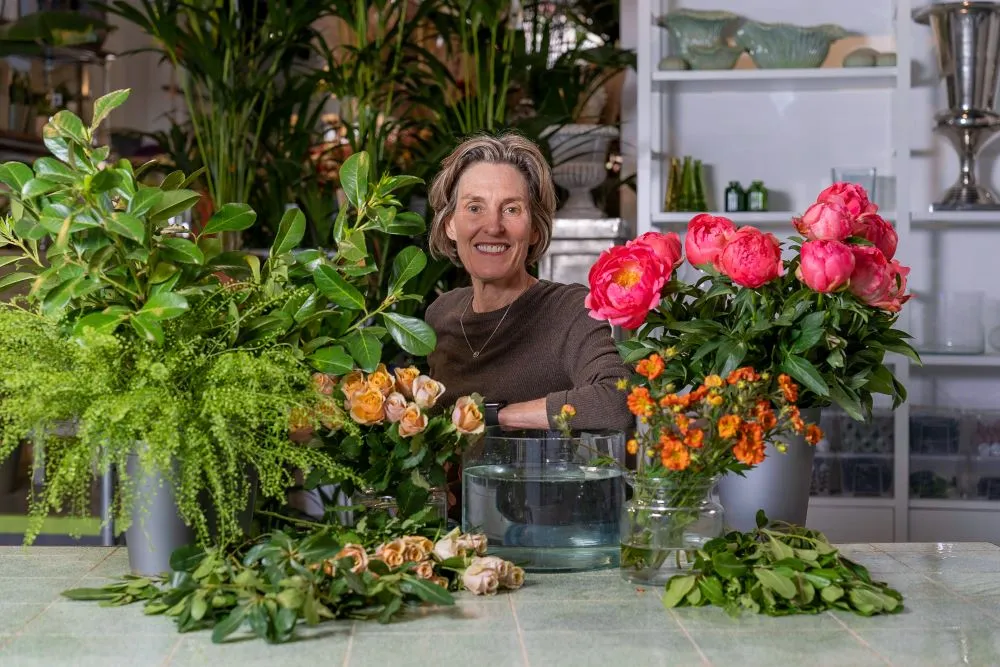 Dundee Butcher, a former florist, formed a business that partnered with the CSP to create a sustainable alternative to floral foam.
A sustainable process for a sustainable product
Partnership with NatureWorks has been essential to Phoam Labs’ journey.
“Sustainability was front and center from the founding of our company,” says Goldfeld. “We wanted to develop a process that was sustainable from beginning to end, and that starts with bio-based materials.”
The use of NatureWorks’ plant-based resin cuts down on waste before the foam even leaves manufacturing facilities. In traditional foam manufacturing, bricks are trimmed down to shape, and scraps head straight to the landfill. But because it’s foamed through a physical process made from plant-based resin, scraps of the foam can be collected, broken down, and used to create more foam, avoiding needless waste.
Other elements of the process are more sustainable, too. To create foams, resin undergoes a foaming process with a blowing agent. The most common blowing agent is isobutane, which is harmful to employees and the environment. Instead, Phoam Labs operates an entirely physical foaming process using carbon dioxide sourced from bio-based ethanol fermentation. That means no additives are needed, and the carbon dioxide “gets another use before it ever enters the atmosphere,” as Goldfeld explains.
Creating a circular economy at scale
Phoam Labs’ foam doesn’t just provide on-par performance with a lower carbon footprint: it offers florists a higher level of convenience. Because it can be composted alongside blooms and stems, entire arrangements can be tossed in the compost without being pulled apart first. Compostability saves florists time and effort and diverts flowers to compost that might otherwise end up in landfills, providing a valuable feedstock to composters.
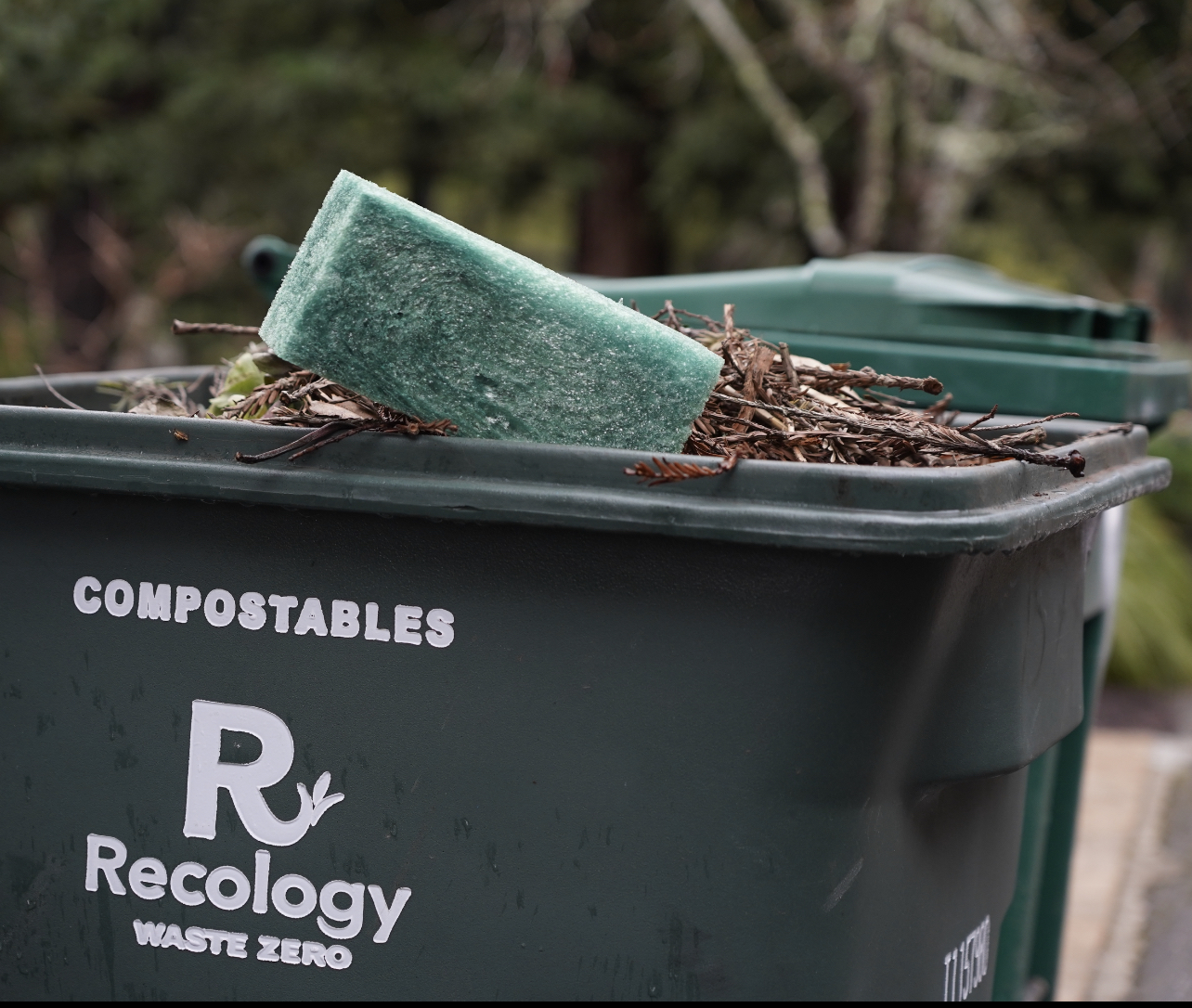
Collaboration with NatureWorks has been integral to commercializing this innovative foam, with NatureWorks serving as a resin production partner. Pending their certification for both home and industrial composting, Phoam Labs plans to introduce their product commercially in Europe later this early next year, with the U.S. following shortly after.
By offering florists and consumers a compostable alternative, Phoam Labs aims to help the floral industry incorporate sustainability into every decision. “That starts with NatureWorks,” says Goldfeld, because NatureWorks plant-based monomers are sustainably produced. That means more compostable foam can be created with less impact on the environment. After use, it returns to the water and carbon dioxide that it originally came from—and not the landfill.